# 🌍 Executive Summary
Increased digitization of the global economy changes the ways products and services are produced, marketed, distributed, and purchased across the world. SuchMany new technologies aslike artificial intelligence, cloud computing, the introduction of “smart devices” and the use of autonomous systems are creating new industries and are changing existing ones. The speed of digitization has its benefits but also imposes difficult governance challenges, within and across borders. **The correct use of digital technology is crucial for offering additional value in today’s global economy.**
Global rules, which are embedded in different multilateral, regional trade, and investment agreements, are challenged by new processes that digitization is introducing. Some countries manage to take advantage of the current regulatory environment and some face the risk of being left behind. The same thing applies to businesses as well. For many companies in the world, the digitization of their core business processes is crucial for their business survival. Many people think that B2C companies are the ones that lead the digital transformation, but instead, B2B companies are the ones that tend to invest most in the digital transformation.
One of the major business processes that companies need to digitize is the long, paper-based, and intensive processes. For B2B oriented companies, documents are the main tool for conducting business. Digital Transaction Management is the key way to begin this process. While working with papers, especially with confidential documents, it is very important to have those documents kept in secured places and to know at any time who has access to them. When dealing with this kind of documents, proof of ownership, proof of identity, proof of authentication, and proof of integrity are of utmost importance.
Within the digital and automated processes, where security, access transparency, and confidentiality are a must, digital identity plays a significant role.
“**Digital identity is the technological link between a real entity such as a person and its digital equivalent entities. It includes a collection of electronically captured and stored identity attributes including biographic and biometric data and something the person has like a smartphone—that can uniquely describe a person within a given context.”**
The importance of the digital identity in today’s world is seen by many as new regulatory environments take shape, and closer collaboration between the financial sector, central/local public authorities, and digital communications operators will give support for providing good solutions and implementation of best practices.
One of the biggest technological trends in the world that will redefine how businesses work, how people collaborate and transact, and identify themselves is the use of blockchain technology. A [blockchain](https://en.wikipedia.org/wiki/Blockchain) represents a distributed ledger of transaction records that are encrypted and securely saved across a network of computers so that the records cannot be altered retroactively without the modification of all successive blocks and the consensus of the network.
The main advantages of blockchain technology can significantly improve and guide the innovation and acceptance process of this technology in many industries. The main benefits of implementing blockchain technology that will be most significant and evident are decentralization; transparency and trust, immutability; high availability and secure and simplification and automation of processes.\
# 📊 Decentralized Finance Market Outlook
### The current stage of DeFi.
Decentralized Finance (DeFi) is a decentralized blockchain ecosystem that makes available any financial products for anyone without having to go through middlemen or banks. Decentralized finance is the most tremendous industry of the blockchain and a new-generation business idea upon decentralization. It works as an independent peer-to-peer platform instead of a centralized institution that forwards and controls transactions.
From 2020, DeFi took a major run reaching over 11x growth in a single year and achieved a value of $81.85 billion. The number of unique addresses on DeFi platforms has massively grown from 250,000 users to 3,300,000 users in one single year making it the most promising blockchain built technology. This market is still in its early stages and institutional support has been a major helping hand.
### Present challenges in DeFi.
Even though Decentralized Finance is an evolution of finance it still has one major problem, identities. Digital identity and access control will fix the major problems of the DeFi space. The lack of Know-Your-Customer standards and Know-Your-Business (KYC/KYB), results in heavily over-collateralized loans because no platform can assure any credit history to prove whether their users are reliable borrowers.
A hot topic across 2021 regarding cryptocurrencies is regulations. A founding principle of crypto is decentralization and anonymity but as much as people love decentralization high numbers of tax evasion, fraud, and scams have been possible due to cryptocurrency. Regulations would help the IRS report responsibility and track crypto tax evasion.
### Vulos Vision - Web3.0 Identity.
When using any type of digital service, people are often not aware of the extent to which the collection and use of their data are already taking place, so they are not always in control of their digital identity.
Decentralized Digital Identities give people self-sovereignty over their data, unlocking the full potential of Web3.0 applications. Vulos is aiming to be the one KYC/KYB platform across many platforms eliminating user problems and offering trust score evaluation, increasing the reputation of borrowers on many DeFi platforms, thus lowering the collateral for users with a higher trust score.
Vulos offers its Digital Identity services for Individual Uses (Peer-to-peer, Mobile and Remote Notary Public, Real Estate Agents, Brokers etc.), Business Uses (Insurance Industry, Healthcare Industry, Supply Chain etc.), Legal Services and Government sectors.
# 👤 Digital Identity Market Outlook
## Digital Identity - Definition, Lifecycle, and Methods.
### **Definition**
The World Economic Forum provides the following definition for digital identity: “*a collection of individual attributes that describe an entity and determine the transactions in which that entity can participate*”.
This definition emphasizes the importance of the usage of digital identity. The WEF divides the attributes into three groups: **inherent** (age), **inherited** (behavior), and **assigned attributes** (ID number). These attributes are different for each of these three main user groups: individuals, legal entities, and assets. Here we will only focus on the first two.
The attributes provide both physical and legal entities to partake in transactions by proving to their counterparty that they have the specific attributes required for that transaction

### **Identity Lifecycle**

### **Identity Authentication methods**
Authentication systems can be categorized into three large groups. This categorization is according to the elements that each system uses to verify a user's identity (i.e. to authenticate the user):
1. Systems based on something the user knows**: passwords.**
2. Systems based on something the user has**: smart cards or tokens.**
3. Systems based on something the user is, or biometric authentication systems**: those based on physical traits of the user.**
### **Technical Standards for Interoperability** (based on the type of authentication method used)
\
The major categories of standards listed below fall into the following areas:
**1. Biometrics—Image standard—** There are several competing standards which are in use for capturing face image (PNG, JPEG, JPEG2000 in most of the systems). For fingerprint image (JPEG, JPEG2000, and WSQ) standard are in use. Comments provide guidelines on the selection of image standards for images like face, fingerprint.
**2. Biometrics—Data interchange format —** ISO standards for different types of biometrics like fingerprint, iris, face are listed. The type(s) of biometrics selected for implementation of identity systems would dictate the standards to be complied with.
**3. Card/Smart Card—**Different standards exist for the different types of cards. There are cards with a chip and without a chip. The cards that fall within the chip category can be contact or contactless cards.
**4. Digital Signatures ;**
**5. 2D bar code—**The standards commonly used PDF417 and QR codes are listed.
**6. Federation protocols—** The usage of Open ID Connect and OAuth combination is increasing for the Federation.\
# 📈 Digital Identity Market Size, Trends, Challenges and Drivers
**The Identity Verification Market is expected to grow at a CAGR of 13.1% over the forecast period 2021 to 2026.** The acceptance of digital payment methods is expected to improve post the COVID-19 outbreak and play a stronger role in the long term. \
With cash being seen as a potential carrier for the virus, governments and regulatory bodies are discouraging its use. For instance, the use of cash in Britain was halved, following government-imposed lockdown. In the United Kingdom, due to the COVID-19 outbreak, FATF guidelines have enabled customers to send selfies, and email scanned ID documents as proof for identification.
* **Adoption of solutions through stringent regulations and the need for compliance are influencing market growth.** The regulatory authorities have now become more stringent toward KYC (Know Your Customer) and AML (Anti-money Laundering) compliance, among reporting entities
* **With increasing online services, combined with smartphone penetration, verifying identities digitally are becoming crucial for both businesses and governments.** The regulatory authorities are increasingly becoming stringent toward KYC and AML compliance among businesses, to control financial crime. FATF (Financial Action Task Force) increased the scope of reporting entities and recommended the member countries to oblige the legal professionals, art dealers, and virtual asset dealers to perform AML screening on their customers.
* **The European Union launched the fifth AML directive under which the identity verification threshold for the prepaid card industry was reduced from EUR 250 to EUR 150.** Additionally, the scope of AML regulations is further enhanced. Moreover, government bodies, worldwide, emphasize on creating stringent regulations to curb identity theft and make efforts, to get the global population under the legal identity umbrella. The UN and World Bank ID4D initiatives aim to provide everyone on the planet with a legal identity, by 2030**.**
* **The growing number of financial frauds in businesses is influencing the rise of identity verification solutions for businesses.** According to a survey by American Express in 2019, about 27% of the sales ended up in fraudulent transactions, influencing merchant decisions to deploy frictionless checkout systems. Moreover, around 69% of the merchants in the United States have spent a significant amount of time and money dealing with payment fraud.
* **Identity theft is a major part of financial frauds that are challenging digital payment growth and adoption.** Due to this, enterprises across the world are increasingly spending on solutions for identity verification. According to the Insurance Information Institute (III) report, 14.4 million identities were stolen in 2018, and about 3.3 million victims were liable for a financial penalty. Additionally, the report mentioned that over 40% of the stolen identities were used for the execution of credit card fraud.
* **Moreover, enterprises across the world are increasingly spending on the digitization of their businesses, including their payment processes.** According to a survey by Visa, over 80% of consumers mentioned digital-related benefits as motivating factors to shop. Due to such developments, SMEs are expected to be at the forefront of digital transformation, as they make up a large share of private sector businesses in the world. For example, according to the UK Parliament Business, Energy, and Industrial Strategy Committee, SMEs make up 99.9% of all private sector businesses in the United Kingdom and employ 16.3 million people or 60% of the UK’s private-sector workers.
* **A growing trend in the identity verification space drives out previous industry standards, such as KBA and SSN verification, out of the picture, as they are considered insecure in the ever-changing technological environment.** Equifax hack, which exposed 147.7 million Americans' personal information, stands as an example. Hence, businesses are looking for better solutions to perform identity authentication.
* **Growing consumer propensity toward mobile payment solutions is further driving the market demand.** According to the Mobile Economy Report of 2019, the mobile ecosystem generated USD 1.1 trillion in economic value, in 2018. Moreover, Asia-Pacific is expected to contribute toward the market growth, owing to the growing adoption of mobile payment solutions and the e-commerce market. For instance, over 583 million people used mobile payment in China in 2018, an increase of 10.7%, according to the China Internet Network Information Center (CNNIC).
New digital players, threats, and opp’s arise, as the distance of location and time between third parties, like buyers and sellers are the new standards. One of the **most important drivers** for the **growth of the online business** is the **existence of a reliable and strong digital identity.** This helps new players and incumbents (both public and private) to operate in an efficient and safe way.
There are a couple of worldwide initiatives regarding Digital Identity that will help in the upcoming years, to provide opportunities for 1.1B people to have their own digital identities and help them in acquiring better access to educational, health, and financial services. Here are a few of them:
* **Commonwealth Digital Identity Initiative -** An initiative with support from World Bank women and girls from marginalized.
* **ID2020 Project -** ID2020 is a public-private partnership dedicated to solving the challenges of identity for marginalized people through technology.
* **ID4D** - The UN and the World Bank also have their own identity initiative, Identification for Development (ID4D), which has a goal of providing everyone on the planet with a legal ID by 2030.
* **eIDAS -** European regulation for electronic identification and trusted services for electronic transactions.
**The top 5 key trends that are moving things for trusted digital identity market in 2021 are:**
**1. More mobility and convenience**
Implementing trusted digital IDs is a MUST, specifically when the number of people working remotely and using online services from the convenience of their own home is increasing with each day. A [Gemalto research](https://www.gemalto.com/mobile/documents/iot-consumer-experience) shows that 70% of these users would like to have trusted digital ID’s and around 66% of them answered that they will likely use their IDs when performing online transactions.
**2. Greater demand for security and trust**
Many users of online services claim that they fear fraud, phishing, and hacking which ends with their personal information being stolen or misused. So the demand for better security and trusted systems is increased.
**3. New regulations**
New regulations for personal data protection are enforced on companies this year, such as the General Data Protection Regulation for companies that serve citizens from the E.U. There is a new revision of the Payment Service Directive (PSD2) which is introduced by the European Commission allowing two new players in the financial market to appear: AISP (Account Information Service Provider) and PISP (Payment Initiation Service Provider). Trusted digital ID services will play a big role for the Account Service Providers.
**4. The shift towards digital identification systems**
There is a shift towards implementing different identification systems and their acceptance has been growing, due to the fact that users are resilient in connecting their social media profiles with personal bank accounts or other accounts connected with different assets.
One of the major Social Media Networks, Facebook, has recently acquired a company for identifying government-issued personal ID cards.
**5. The technology**
Private companies, government institutions as well as regulators search for solutions that enable clients and citizens to identify themselves.
**For financial institutions, the identity issue plays an important role in business.** Now it is really necessary for banks to create strong and trusted digital ID schemes that can support their knowledge and experience at verifying identities in the physical world. There are many **challenges in order to adapt the analog world ID model to the digital one, such as lack of security, no interoperability, cyber attacks, a lack of user control over the data,** etc. Both the business and the government sector need to be able to find solutions that protect users and keep people’s information private and secure.
# 🫂 Worldwide Initiatives of Digital ID
A number of companies and governments are making headway in this field:
* China Mobile has entered the digital ID market by presenting [a mobile authentication system](https://www.gsma.com/identity/china-mobile-now-scales-gsma-mobile-connect-global-authentication) that is used by over 62 million users. Over 450 million daily transactions are executed on the platform offering a range of authentication capabilities across different commercial applications.
* In India, the [government’s digital ID platform, Aadhaar](https://www.gemalto.com/govt/customer-cases/aadhaar) has now been linked to around 558 million bank accounts. The platform was launched in 2009, and since then over 1.18 billion biometric accounts have been created.
* Biometric technology is also popular in Pakistan. The popular platform [NADRA](https://www.nadra.gov.pk/local-projects/identity-management/biometric-verification-services-2/) works with banks, mobile operators, and others. The biometric data kept in their databases helped in managing the payments of flood relief to [2.4 million families](http://www.bbc.com/news/world-asia-18101385).
* In Estonia, the [Digital ID](https://www.gemalto.com/govt/customer-cases/estonia-eid) service manages the public and private interactions of 98% of the population. This encapsulates everything from eVoting, traveling within the EU, health insurance, e-prescriptions, public transport, voting, proof of ID, and taxes. In all, there are over 700 applications on the platform.
[Other initiatives](https://blog.gemalto.com/mobile/2018/03/28/the-digital-identity-ecosystem-is-evolving-and-operators-cannot-afford-to-miss-out/) are initialized across Europe, including the Single Digital Identity. Countries like Canada, Austria and Spain are also heading in this direction. They highlight the role that telecom operators can play, something which is important for widespread acceptance. For financial institutions, identification and verification have always been crucial elements for financial services. [Banks alone are now spending over $1 billion a year on different ID management solutions.](https://www.accenture.com/_acnmedia/Accenture/Conversion-Assets/DotCom/Documents/Global/PDF/Dualpub_9/Accenture-Future-Identity-Banking.pdf)
What is really important, when interacting online, is the validation that others do (identity providers or validators) of the attributes that we share to prove our identity.\
The level of given assurance to interacting parties, whether they are individuals, businesses, or governmental institutions, becomes more intense, **a higher degree of veracity is required.** This happens because confidence is crucial in trade relations. This is the reason why identity providers with a high level of assurance, like public authorities or financial institutions, will be the leaders of the future ID markets
##
# 🧑🔬 Research Facts
The number of online applications and services is increasing, which is why the volume of personal information companies own about online users is growing exponentially too. According to a research study provided by IBM, 90% of all of the personal data in the world has been created in the last two years.
Today, the collection, storage, and selling of people’s online data is a big business. This means the individual’s rights for protecting private, personal data, or the right for knowledge where, when, and to what extent that personal data is used, is of utmost importance. One of the main regulations, introduced in Europe is the General Data Protection Law, which provides the above-mentioned rights to all EU citizens.
According to the Boston Consulting Group, in the European economy, the applications built on the use of digital identity can drive significant value growth for public and private institutions.
“At a [22% annual growth rate](https://www.bbvaresearch.com/wp-content/uploads/2018/02/Digital-Identity_the-current-state-of-affairs.pdf), the annual economic benefit is in the position of reaching €330 billion by 2020.”
The sharing of personal data in a private, controlled, secure and convenient way, is critical for the future of digital identity, where it Is implied that the user must be the owner of his personal information and decide when, where and with whom this information is shared. \
### Audience Characteristics, Use Cases, and Behavior
Asia-Pacific is expected to provide significant market growth for identity verification over the forecast period. In recent years, the region witnessed accelerated growth in the digital banking sector, where more fintech and newly licensed virtual banks are approaching this market to address the unbanked segment, while traditional banks are in the transformation stage to manage costs and achieve operational efficiency in this increasingly competitive landscape. However, digitization has exposed businesses to new risks, such as online identity fraud, account takeovers, and data breaches.
* Fraudsters are increasingly growing advanced with the sophisticated technologies they now use to impersonate legitimate users. Deepfake technology poses a growing identity threat by using advanced artificial intelligence (AI) for creating seemingly real videos that take a person in an existing image or video, and it replaces them with someone else’s likeness.
* More Asian companies are integrating real-time liveness detection capabilities into their eKYC systems that ensure the remote user is physically present and can defend against spoofing attacks. As the digital economy grows, multi-factor biometric identity verification and certified liveness detection technologies are trending to evolve accordingly, to better serve and address the changing security needs of businesses and consumers.
* India experienced a rapid increase in cybercrime registration, with the country ranking fifth in terms of the overall DNS hijacks. According to Gemalto, India accounts for 37% of the global breaches in terms of records compromised or stolen. With the increasing number of malware and ransomware attacks in the country, it states a significant factor in driving the adoption of identity verification solutions.
* Furthermore, in China, in March 2020, China Everbright Bank (CEB) announced a blockchain-based supply chain finance solution by Ant Financial. By implementing Ant Financial’s Duo Chain technology, China Everbright Bank intends to improve the security of SCF, and eliminate fraudulent transactions. As reported by Sina, the Duo Chain platform allows users to complete identity verification and electronic signatures with CEB, while recording all relevant transactions to a distributed ledger for tracking purposes.
* Furthermore, in March 2020, the government of Singapore is preparing for the transition to a facial recognition program, which will eliminate the need for ID cards by 2022. The announcement of the installation of Photo kiosks in government agencies across Singapore will effectively inhibit the growth of the market.
### Customer Attitudes towards Digital Identity
A report conducted by Onfido in UK, USA, Germany, and France to which 4000 people responded, have the following attitudes and expectations from digital identity: Here are the report highlights:
* The way customers access your services has never been more important. For many, digital is fast becoming the only available channel. We’re accessing more digitally than ever before.
* People are accessing more online. Roughly 60% of people are accessing more services online since the start of the Covid-19 pandemic.
* People are dissatisfied with the way their digital identity is handled. Currently, businesses aren’t meeting their expectations.
* Frustrations around digital identity lead to abandonment. And younger generations are more likely to abandon than older generations.
Customers’ number one concerns are now focused on privacy and security.
# 📝 Digital Signature Market Outlook
### E-signature vs. Digital Signature
Regularly the terms e-signature and digital signature are used interchangeably, but each has different features that make the distinction between the two.
**“Electronic signature,** or **e-signature,** refers to [data](https://en.wikipedia.org/wiki/Data) in electronic form, which is logically associated with other data in electronic form and which is used by the [signatory](https://en.wikipedia.org/wiki/Signature) to sign. This type of signature provides the same legal standing as a handwritten signature as long as it adheres to the requirements of the specific regulation it was created under (e.g., [eIDAS](https://en.wikipedia.org/wiki/EIDAS) in the [European Union](https://en.wikipedia.org/wiki/European_Union), [NIST-DSS](https://en.wikipedia.org/wiki/Digital_Signature_Algorithm) in the [USA](https://en.wikipedia.org/wiki/United_States) or [ZertES](https://en.wikipedia.org/wiki/ZertES) in [Switzerland](https://en.wikipedia.org/wiki/Switzerland)).**”**
**“A digital signature** guarantees the authenticity of an electronic document or message in digital communication and uses encryption techniques to provide proof of originality.**"**

### Law Standards for e-Signature
There are different laws accepted in countries worldwide regarding the use of e-signatures. The major difference in laws and how e-signatures are treated and accepted are laws implemented in the U.S. and in Europe. Regarding which territory we’re targeting as our initial user base, those laws need to be our focus and fully compliant with the implementation of e-signatures and digital signatures in our solution. Here is a short [list](https://en.wikipedia.org/wiki/Electronic_signature#Laws_regarding_their_use) of laws regulated in different countries:
* **Australia -** [**Electronic Transactions Act 1999**](http://www.comlaw.gov.au/Details/C2011C00445) **(which incorporates amendments from Electronic Transactions Amendment Act 2011),** [**Section 10 - Signatures**](http://www.comlaw.gov.au/Details/C2011C00445/Html/Text#_Toc296406959) **specifically relates to electronic signatures.**
* **Canada -** [**PIPEDA**](http://laws.justice.gc.ca/eng/acts/P-8.6/index.html)**,** [**its regulations**](http://laws-lois.justice.gc.ca/eng/regulations/SOR-2005-30/?showtoc=\&instrumentnumber=SOR-2005-30)**, and the** [**Canada Evidence Act**](http://laws-lois.justice.gc.ca/eng/acts/c-5/)**.**
* **China - Law of the People’s Republic of China on Electronic Signature (effective April 1, 2005)**
* **European Union -** [**eIDAS**](https://en.wikipedia.org/wiki/EIDAS) **regulation on implementation within the EU is set out in the** [**Digital Signatures and the Law**](https://en.wikipedia.org/wiki/Digital_signatures_and_law#European_Union_and_the_European_Economic_Area)**.**
* **India -** [**Information Technology Act**](https://en.wikipedia.org/wiki/Information_Technology_Act)
* **Ireland -** [**Electronic Commerce Act 2000**](http://www.irishstatutebook.ie/2000/en/act/pub/0027/index.html)
* **Japan -** [**Law Concerning Electronic Signatures and Certification Services, 2000**](https://en.wikipedia.org/wiki/Digital_signatures_and_law#Japan)
* **Russian Federation -** [**Federal Law of Russian Federation about Electronic Signature (06.04.2011)**](http://pravo.gov.ru/proxy/ips/?docbody=\&nd=102146610)
* **Switzerland -** [**ZertES**](https://en.wikipedia.org/wiki/ZertES)
* **UK - s.7** [**Electronic Communications Act 2000**](https://en.wikipedia.org/wiki/Electronic_Communications_Act_2000)
* **U.S. -** [**Electronic Signatures in Global and National Commerce Act**](https://en.wikipedia.org/wiki/Electronic_Signatures_in_Global_and_National_Commerce_Act)**;** [**Uniform Electronic Transactions Act**](https://en.wikipedia.org/wiki/Uniform_Electronic_Transactions_Act) **- adopted by 48 states;** [**Digital Signature And Electronic Authentication Law**](https://en.wikipedia.org/wiki/Digital_Signature_And_Electronic_Authentication_Law)**;** [**Government Paperwork Elimination Act**](https://en.wikipedia.org/wiki/Government_Paperwork_Elimination_Act) **(GPEA) and** [**The Uniform Commercial Code (UCC)**](https://en.wikipedia.org/wiki/Uniform_Commercial_Code)
E-signatures can be created with high levels of security, with each having its own set of requirements and means of creation on different levels that prove the validity of the signature. To provide an even stronger [probative value](https://en.wikipedia.org/wiki/Relevance_\(law\)) than the above described advanced electronic signature, some countries like the European Union or Switzerland introduced the qualified electronic signature. It is very challenging to undermine the authorship of a statement signed with a [qualified electronic signature](https://en.wikipedia.org/wiki/Qualified_electronic_signature). This type of statement is [non-reputable](https://en.wikipedia.org/wiki/Non-repudiation).[\[8\]](https://en.wikipedia.org/wiki/Electronic_signature#cite_note-Turner-Understanding-eIDAS-8) Technically, a **qualified electronic signature** is implemented through an advanced electronic signature that utilises a digital certificate, which has been encrypted through a security signature-creating device and which has been authenticated by a [qualified trust service provider](https://en.wikipedia.org/wiki/Qualified_electronic_signature#Qualified_Trust_Service_Providers).
The European Union has introduced a list of qualified TSP’s (Trust Service Providers) which provide signing with qualified electronic signatures. So major players in this market that target the EU audience with e-signing services have to offer e-signature methods from these providers.
# E-signing Market Size, Trends, Drivers, and Challenges
According to research agencies reports on electronic market trends, **the global e-signature market is expected to grow at a CAGR between 25 to 38%** during the upcoming period. One [research](https://www.marketsandmarkets.com/PressReleases/digital-signature.asp) shows that the market size is estimated to grow from USD 662.7 Million in 2016 to USD 2.65 Billion by 2021, at an expected **Compound Annual Growth Rate** (CAGR) of 32.0% from 2016 to 2021. [Another research](https://markets.businessinsider.com/news/stocks/global-e-signature-market-size-share-development-growth-and-demand-forecast-to-2023-industry-insights-by-type-by-deployment-by-use-case-1003715690) exhibits an even bigger expectation of market growth, which predicts **CAGR of 34.7% during the forecast period, to reach $9,073.1 million by 2023.**
It is expected an important growth in demand for e-signatures and use of it in many activities. This is all due to increased security concerns among companies, **growing government focus towards eliminating paperless work** together with **growing e-commerce market** and **increasing online transactions** across the globe.
The global e-signature market is **driven by factors** such as the increase of online shopping and online documentation, penetration of internet and the growing acceptance of e-signatures in the BFSI (Banking, Financial Services and Insurance) sector. Other important **market drivers** for the growth of the e-signature market, are the **increased demand for security,** **workflow efficiency** and **supply chain enhancement incorporates.**
The biometric-based signature technology is considered as a most protected measure in order to precede the authentication and identification process of an individual. The pattern of a signature cannot be replicated or stolen. This is the main factor that creates awareness and interest about this among companies across the world.
The **e-signatures use shown in number of transactions**, solely in [2014](https://www.statista.com/statistics/618202/worldwide-esignature-transaction-annually/), was around 210 million transactions electronically signed worldwide.
The current **market challenges** happening in the digital signatures market are:
* Implementation of stringent norms by the government authorities leading to uncertainties regarding electronic and digital signatures;
* redundant technology adopted in the development of digital signature
* inconsistency among various technologies of these signatures
# Who uses e-signing services and their current needs
Geographically, **North America is the largest digital signature market with more than 40% revenue contribution** to the global market in 2017 and this market’s growth is due to the extensive growth opportunities observed regarding the demand of these signatures from the legal and financial sector along with adhering to strict cyber regulatory reforms.
It can be noted that the Asia-Pacific digital signature market is expected to have the highest growth of extensive adoption of this technology among SMEs. Moreover, the government of India has introduced different measures to boost and support the growth of the digital signature market in this region.
1. **Digital Signature Market**

Source:
The digital signature market depending on its application is segmented into **government, healthcare and life science, telecom, IT, banking, retail,** and others. Among these industries, the highest demand and interest comes from the banking industry. The reason for this is attributed towards the increasing benefits of digital signature such as the steady process of the invoice, enriched compliances, and deducted turnaround time for a particular document.
**Many people can benefit from the use of e-signing services whether it is for individual uses or professional needs, but here are some users that will benefit from these type of software applications the most:**
* **Real estate professionals**
Whether it is about purchase agreements, lease agreements, disclosures, liens, easements, real estate professionals are on the go constantly. They have the need to sign documents and end purchases on the spot with the clients, as well as have anything available. Also, they have the need to confirm the identity of the clients before signing any type of agreement.
* **Lawyers and law firms**
Legal formalities are very long processes. There is too much paperwork involved, when dealing with commercial licenses, terms and conditions, business contracts, confidentiality forms, etc. E-signatures can help legal companies overcome this time-consuming administrative nightmare with digital documentation and help them not only with automation of the signing processes but also with the electronic archiving of existing documents. With the use of e-signing software apps, lawyers can finalize contracts faster by uploading legal documentation to a central location and allowing colleagues to review and validate the documents with e-signatures. Likewise, legal documents can be shared with clients so they can review and send the documents back after adding their e-signatures using their smartphones.
* **Notaries**
Different documents need to be notarized and verified by an authorized notary agent or also known as the notary public in the United States. While providing services, notaries need to confirm the identity of each individual, inspect personal and other related documents. Before finalizing the signing process, they need to ensure the signers understand the content of the documents they are signing. The notary is responsible for ensuring the identity of the people signing important documents, following the country’s rules. Each notary must ensure licensing requirements in the country in which he/she provides the services. Notaries can work on their own or they can be employed by financial institutions and insurance companies; banks, title companies, and other types of businesses.
# Major Market Players
Globally industry competitors in the digital signature market are leveraging market growth through technological advancements in improving the security measures of these types of signatures. The major players in this industry are highlighting the focus of competitors on new product development together with forming different partnership agreements in order to expand their consumer base across the globe.
The major market players in the e-signature (digital signature) market in 2018 are DocuSign, AdobeSign, Signix, OneSpan (former eSign Live), and Hellosign, which are closely followed by RightSignature, SignNow, and many others.
DocuSign is the key player in the Global E signing market. As illustrated before, significant growth in demand for e-signature is anticipated due to **surging security concerns among enterprises,** growing government focus towards **eliminating paperless work** coupled with **growing e-commerce market,** and **increasing online transactions across the globe.**
A study about the Australian market, from Forrester Consulting conducted for AdobeSign, indicates an exponential growth in e-signature use across all Australian business segments. Australian law allows nearly all documents to be signed using simple electronic signatures with minimal requirements and clear enforceability.
Additionally, research indicates that the global e-signature market is moderately competitive, with **players investing heavily in research & development** and enhancing the e-signature solutions and security to increase their market shares.
The e-signature market, even though it is consolidated, offers the possibility for smaller companies to try out in this market, but the thing is once they manage to provide an additional value with their service and start to become more serious competition, they get acquired by larger competitors such as Docusign. AdobeSign and OneSpan.
All these e-signing services lack the possibility to create an additional value for the individuals and the business, creation of digital Identity that can be used for many purposes at many places.
# 🔏 e-Signature Problems
### **Problems when signing legal documents**
In the results from Thomson Reuters Survey; published July 10th, 2018 people have identified several concerns and problems when there is a need to electronically sign a legal document:
* There is still **uncertainty when a document can be executed electronically** (40% are not sure which document can be executed electronically; 32% think technology is not aligned with law standards).
* **Signing improperly executed documents.**
### **Problems with paper-based processes**
When working with intensive, paper-based processes, such as legal and notarial processes a lot of concerns and problems can arise. In many developed countries, **40% to 60% percent of the companies are trying to implement or have implemented digital services** that will reduce their costs in the matter of money and time.
Such an example are traditional notaries, which depend upon the use of paper, seals and ink and keeping it in a physical journal. In order to get notarized in a traditional notary system, a person has to seek help from the notary, travel miles to get his document certified or tested plus the cost involved is high. There is also a **risk of documents being tempered or lost due to natural disasters** such as floods, earthquakes. Such an example is the incident in Haiti. All the records were lost during the earthquake and people were fighting over land. Hundreds of millions of documents are notarized in the world wills, mortgages, citizenship forms, handgun applications.
In the past couple of years, it is a trend to remove the old way of providing notary services, with the digitization of this paper-based processes. Notaries have shifted to E-Notaries using e-signatures where people can get their documents notarized in an electronic way.
In the United States, there has been a huge increase in the use of e-Notaries. Governments and businesses have accepted it and given it their trust. Every industry can take advantage of the automation of notary services that involve the making and keeping of paper-based notaries. **The use of e-signatures will effectively boost the market and reduce the administrative cost involved.** Now E-Notarized affidavits are being accepted in court, lobbyists use them before filing their annual reports, adaptation, and legal filing. Most importantly, the mortgage industry can use it by making the process efficient and less complex. Every state has added its own regulations and rules in its legislature.
However, still, **there is no guarantee that in case of urgent need or any misfortune the document or certificate is still available and is in its original form in the existing database.** In case of E-notarization, your document is not tamper-proof and it is vulnerable to internal fraud and external hacking. E.g a recent data breach attack on DocuSign has resulted in a targeted email malware campaign.
One of the basic requirements for the notary to be valid is that all people who are involved in signing the document to be physically available, prove their authenticity, their willingness to sign and their awareness about the content.
Notaries deter fraud and make sure that signer knows what documents they are participating in. The solution to this is to move e-Notary and all document-based services towards blockchain and make use of its security benefits provided by the world's biggest supercomputer achieved by a distributed consensus algorithm
# 🗣️ Digital Identity Problems
While using any type of digital service people are often not aware of the extent to which the collection and use of their data are already taking place, so they are not always fully in control of their digital identity.
\
The following facts are big concerns and problems, which users face when providing personal data to 3rd parties when using different services.

# 💡 Project Background
Everyone needs trust in order to interact with each other. Trust shapes the direction of national growth and it is fundamental for every healthy economy.
Due to the recent economic shift, the way businesses work has changed. Now we have automated services, humans talking to machines, and vice versa. In the internet era of content, everything can be copied. In the past, there was no way to create digital scarcity in a purely digital space. However, this problem is solved with the help of a trust machine, designed and developed by Satoshi using existing technologies e.g advanced encryption mechanism and consensus algorithm.
All human actions that require trust can rely on blockchain for proof using the history of transactions that have occurred in the past. Businesses need to keep a record of proof that a deal is signed or an event has happened at a certain point in time.
In the past, in order to have proof of signed documents governments have designated drafters and notaries to keep a journal of proof. This journal will be used in the future if some agreeing parties attempt to breach the terms of transactions.
Notaries are the authorities given the power to certify documents, reactions, transactions, and identities. While their set of duties are vast, one of their main duties is to certify documents that bring most of the money. Notaries are important gatekeepers of the economy, particularly establishing property rights, wills.
# ✏️ Vision and Mission
### Vision
*Become the most trusted, global platform with the largest network of individuals, companies, and governments, where all participants in the network trust each other, have greater control over sharing their personal and confidential business data while increasing their productivity with digitalization of different paper-intensive activities.*
Despite all the digitalization, globalization and decentralization, people are still limited to work with a paper regarding their legal, business, and trading contracts.
Vulos solves this problem for businesses or individuals by providing them with a real-time environment where they can create legal documents collaboratively using video conferencing and chat tools.
### **Mission**
*Vulos is a decentralized application that allows individuals, business professionals, and government institutions, to securely communicate and share, personal and confidential data, over permissioned, private channels on the blockchain. By providing them the ability to use their digital identity and digital signature for signing different documents, we guarantee the integrity of all messages and documents they will share with others on the Vulos platform.*
Our mission is to allow people to take advantage of all the benefits the blockchain technology offers, such as trustlessness, enhanced security, increased transparency and better traceability, thus use them in their daily business operations.
\
# 🛠️ Vulos Services
### Digital Signature
When using digital signatures the holder needs to have cryptographically connected keys: a public key, made widely available and acts as authentication anchor, and a private key, used to produce digital signatures.
When signing a document, our blockchain network guarantees that you are the person who signed and that your personal data haven’t been tampered. Additionally, you can set rules for signing the necessary document, such as date and time, parties involved and specific conditions which need to be met.
Try Vulos Signature [here](https://app.vulos.io/auth/login).
### Digital Identity
The digital identity in Vulos.io, represents a set of digital records that define user attributes. Vulos.io blockchain serves as a root Certificate Authority (CA) which issues X.509 digital certificates, in which your digital identity is encapsulated.
This digital ID will be held secure in our private, permission-based blockchain. We also provide you with the ability to control who has access to your personal data.
Try Vulos Identity [here](https://identity.vulos.io/Account/Login).
### Cryptonoids
Vulos has always been visionary on the Metaverse, and the Cryptonoids, a play-to-earn blockchain game — is a perfect addition to our ecosystem. Tied closely to Vulos Identity, Cryptonoids allows you to connect your Digital Identity with gaming and NFT characters staying anonymous online.
To view the introductory Cryptonoids dashboard click[ here](https://vulos.io/cryptonoids).
### Verification
All signed documents, once time-stamped and recorded in the blockchain cannot be altered and modified. This is a guarantee that these legal documents were signed at a specific date and time by appropriate parties.
The content of the document can only be accessed by the user’s private key.
### Document Audit Trail
You will always have control over who has access to your documents.
The quick dashboard overview, helps you stay up-to-date on the status of all automated processes in which you are involved.
### Artificial Intelligence
With the help of Artificial Intelligence, we can analyse the content of many documents in order to identify contract clauses, regardless of how they are phrased.
It will accelerate the identification and review process of all legal documents. Using speech-to-text we can even speed up the creation of legal documents from scratch.
### Custom, Automated Workflows
The signing process integrity is improved with our custom, and automated workflows that eliminate the need for intermediaries. It enhances user experience by automatically enforcing the execution of predefined agreement terms with the use of Smart Contracts.
### Security & Privacy Compliance
Your personal documents are encrypted using 256-bit Hash algorithms, and all the content within the document. The personal data of all signees is secured in the private, permissioned blockchain network.
The privacy of your personal data is respected and compliant with the new GDPR law.
### Video Conferencing & Real-time Collaboration
You can work together with your team anywhere you go, by using our chat and video conferencing tool. Working in real time speeds up every process of you daily working routines that involve working with documents.
### New & Custom Document Templates
With Vulos.io, you can create a new document template from scratch, or reuse existing documents that can be customised to your needs with a few simple clicks. You can also password-protect these templates and share them with others.
### Rewarding System
As a user of Vulos.io, whether you are an individual or a company, you get initial Vulos tokens as a reward for the purchase of a specific pricing plan.
Once you start using the platform, you get rewarded with not only Vulos tokens per the number of processed transactions, but you also earn Trust score points which can make you a more reliable user or business that people can work with. With the level of Trust score points you earn additional Vulos tokens that can be exchanged for the use of our services.\
# 📍 Individual Use Cases
### Personal or Peer-to-Peer
Individuals can have an online accessible, encrypted repository of personal ownership records, certifications, medical history, legal contracts, etc. The identity technology provides secure and private digital ID that can be used from anywhere, at any time for different purposes. Vulos.io blockchain platform allows easy application of digital signatures to documents and send it to the appropriate parties.
### Mobile and Remote Notary Public
Many notaries or notary public, still notarise and verify legal documents manually and enter records for the notarial acts within large physical registers. This way of notarising documents is susceptible to human errors and time-consuming. Also, there is a risk for someone to tamper the existing records. To solve this problem Vulos.io provides notaries around the world with the possibility to:
* Register to one big Online Notary Public register
* Get a unique Digital ID embedded within the X.509 digital certificate
* Upload and customise the different type of documents
* Notarise documents with the use of a digital signature and a notary seal
* Keep track and audit their notarial act register at any time, from anywhere
* Audio and video conferencing tool that can serve as a proof of identity in the case of remote e-notarisation process
* Earn Trust level points and VULOS tokens that can later be exchanged for Vulos.io services
### Real Estate Agents and Brokers
The barriers of not having Real Estate Listings and Title records in one place and the difficulty of accessing them by non-real estate professionals can be surpassed with the use of Vulos.io Blockchain platform.
Our platform can help both individuals and real estate agents and brokers to securely share data from one place, communicate and collaborate privately and be in control over who’s accessing their data and when, and who has permission for access as well. Here is how the real estate agents and brokers can benefit from using our platform:
* Shared, secure and permissioned worldwide database of title records and multiple listings and other documents
* Real-time access to property information
* Real-time collaboration and communication
* Speed up buying/selling process due to on-site signing and notarisation of documents
* Reduced risk of fraud and theft
* Proof of ownership and proof of identity to all participants in the process using Digital ID
* Trust score ranking in the real estate network
* Earn Vulos tokens that can be utilised for the services we provide
# 📍 Business Use Cases
### DeFi Industry
Since its inception in 2008, cryptocurrency has changed dramatically in many sectors. With innovations like this come influential regulatory rules that govern how cryptocurrency is viewed and managed in different countries. Thus, different laws have been developed to create different regulatory systems around the world in all kinds of developed and emerging markets.
The purpose of DeFi is to open another department of democracy for financial services to everyone without the needs of having to go through intermediaries. However, we must always keep our technology safe without going beyond what you need and create a threat to society as a whole. At the end of the day, people enjoy the benefits of a stable and secure environment.
The lack of Digital Identities, KYC & KYB standards is causing the two major problems of Decentralized Finance. Having no record over who your customers are and whether they are worth the company's trust results in highly over collateralised loans.
As we are moving forwards we see that Government Regulations are coming closer and closer, therefore DeFi platforms would not be able to function without having information over their clients. Digital Identities will be inevitable and Vulos is aiming to give people self-sovereignty over their data, taking DeFi to another level.
### Centralized & Decentralized Cryptocurrency Exchanges
Client verification plays a significant role in both Centralized & Decentralized Exchanges, especially with the rising interest of regulators. Digital Identities and KYC/KYB standards give a high level of assurance to all the parties that are participating in a certain fund pool and eliminate the risk of financial frauds.
Cryptocurrency exchanges are not using any high-level verification systems because they are very time-consuming and not automated with Artificial Intelligence and the high costs of KYC integration to their platforms.
Vulos Digital Identity service overcomes these obstacles and will be the main component of this ecosystem. It represents a set of digital records and serves as a root Certificate Authority (CA) which issues X.509 digital certificates. The Digital Identity will be held secure in our private, permission-based blockchain where the users have the ability to control who has access to their personal data.
Trading in accordance with all laws and regulations based on their location reduces the chances of cyber attacks. It is time for all exchanges to see that the compatibility of KYC, AML and CFT is necessary and helps the exchange gain the trust of their users.
### Insurance Industry
Both individuals and insurance companies can benefit from the use of the blockchain-based network, especially in the transparency of sharing data. Vulos.io blockchain platform with all its services can solve several problems and benefit both parties involved:
* Shorten the application process for the new customer by sharing KYC information easier on the same blockchain network
* No risk for duplicate claim records
* Validation and verification for the digital identity of a company or an individual from multiple participants in the blockchain network (notaries, insurance companies, Government organizations)
* Automated application and verification processes
* Fraud deterrence with the use of AI, smart contracts, and the blockchain network by requesting validation of customer info from multiple sources
* Trust and Transparency for shared data by all parties (individuals and insurance companies)
* Reward for each document processing in Trust score points and Vulos tokens that can be exchanged for Vulos.io services
### Healthcare Industry
The applicability of the blockchain technology that Vulos.io uses is enormous in different uses and scenarios, whether that involves pharmaceuticals and participants in their supply chain, healthcare providers or patients. Depending on the services we offer, different parties’ benefits vary:
* Safe and secure drugs production records
* Drug traceability down the supply chain
* Proof of existence of clinical trials data, such as trial protocols, biological records, ICF’s (Informed Consent Forms), etc.
* Proof of identity (Digital ID) for all parties involved that sign, modify and verify sensitive data on the blockchain (Digital Certificate)
* Secure and permission-based access to sensitive data
* Easier, faster, and secure sharing of data between healthcare providers, pharmacies, pharmaceuticals, patients and etc.
* Real-time communication when ad -hoc response is required
* Audit trail of all records at any moment allowing compliance with HIPAA standards
* Customization of document templates used in collecting data
* Automation of processes with custom-defined workflows
* Trust score point and Vulos tokens that can be used for paying Vulos.io services
### Supply chain (Manufacturing Value Chain)
All the participants in the supply chain, starting from manufacturers, transporters, wholesalers, and retailers, can benefit from having a single solution that will solve many of their problems and can help them access and find everything in one place. Vulos.io platform can help them with:
* Records keeping about products and product traceability of how they move within the supply chain
* Custom, reusable document templates for freight bills, bills of lading, FOB terms of sales, etc.
* Verification of procedure compliance by auditing how procedures were completed
* Easy Intellectual Property Management in Production Development
* Real-time communication with appropriate parties
* Reduced quality control reporting & processing time
* Proof of identities for supply chain personnel for more rigorous vendor accountability (Digital ID’s)
* Automated processes for signing and document filling
### Legal Services
Existing legal services workflows are more paper-intensive, including long and manual processing of documentation that is subject to multiple human errors and the possibility of loss. This fact makes these processes ineffective and inefficient. With the use of the Vulos.io blockchain platform, you can automate many of the processes and you can secure, validate and verify any type of legal contract or agreement in digital format.
Legal companies and individuals can benefit in the following way:
* Proof of existence for contracts signed by multiple parties
* Proof of identity for all participants in the signing and notarization process
* Automated signing workflows that can be customized
* Customization of legal document templates
* Legal standards compliance
* Secure and private real-time communication with clients
* AI-based document content analysis
* Rewarded with Trust score points and Vulos tokens
# 📍 Government Use Cases
Government institutions with the use of Vulos.io blockchain technology, can automate and digitize their paper-based processes and join the worldwide paperless trend. With the implementation of digital identity technology, they can solve the problem with lack of formal ID, while at the same time giving people access to health care, education and financial aid much easier.
* Lower documents handling costs
* Easy digital blockchain verification
* Enhanced public visibility and oversight
* Blockchain document identities and ownership records
* Secure and private communication through private, permissioned channels
* Rewarding system and prove over the how different government institutions work
# 📍 GameFi Use Cases
### Introduction
Vulos has always been visionary on the Metaverse, and the Cryptonoids, a play-to-earn blockchain game — is a perfect addition to our ecosystem.. Tied closely to Vulos Identity, Cryptonoids allows you to connect your Digital Identity with gaming and NFT characters staying anonymous online.
[Click here](https://vulos.io/cryptonoids) to view the introductory Cryptonoids dashboard.
Everyone will be able to play Cryptonoids on from our upcoming planets and moons, while unlocking exclusive NFTs to unlock further heroes, or unravel full potential to your current hero. Enduring in-game challenges and obstacles, and purifying planets from evil reigns, $VULOS will be awarded to everyone spending time in-game.
Opportune Cryptonoids ranging from humans to robots and aliens, will be vital to unlocking portals to each world. Each Cryptonoid NFT will have its own strengths, advantages and special attributes, all required to build the perfect team to unlock special missions and capture podiums. First-gen Cryptonoids will be released before the game, moreover, second and further generation Cryptonoids will be descendants of their previous generations.
* Customize your character.
* Convert your character to NFT
* Create and swap Cryptonoid Collections with other users
* Purchase a real 3D Model of your Vulos character
* Use your character as a personal signature for signing documents
*Publishing new heroes and maps will be a never ending journey for Vulos, whereas the community will also be rewarded for their creativity.*

## Cryptonoids within the Vulos Ecosystem
Use your personalized NFT in the whole Vulos Ecosystem and sign documents digitally through Vulos Digital Signature.\
Connect Vulos Digital Identity to your gaming account. Improve trust score and prove it within Vulos to all our partners.
## Where can I get the NFTs?
Vulos NFT characters will be available on all major marketplaces. Exclusive NFTs, to boost special attributes and visualization, will be available as a limited edition.
## VULOS within Cryptonoids
Cryptonoids’ main monetary components are **NFTs (non-fungible-tokens) and the VULOS token itself.** NFTs will be used to unlock new characters, boost their robust abilities, and give them outstanding visuals while the VULOS token will be used as the in-game payment method. Cryptonoids players will be rewarded any missions completed, challenges terminated, future tournaments, leaderboard podiums, and notably for the time they spend playing Cryptonoids.
# 📍 Soulbound NFT Use Cases
### Introduction
**Soulbound Tokens (SBT)** are non-transferable tokens / NFTs that represent the **components of information that make up a person’s identity** and his affiliations. By reshaping the way we present ourselves in systems designed to be trustless, soulbound tokens will pave the way for Web3. The concept was initially introduced by Ethereum cofounder Vitalik Buterin in a [blog post](https://vitalik.ca/general/2022/01/26/soulbound.html) and has caught our attention ever since.
**Within Web3, SBTs will function like a digital resume**. Membership, affiliation, and eligibility information for each individual will be contained in a new non-transferrable NFT. As opposed to NFTs and other cryptocurrencies that can be purchased and sold on the open market, **soulbound tokens are permanently linked to an account**.
As a “Soul” issuer, **Vulos will provide self-certified SBTs** that can be publicly verified on blockchain. Therefore, anyone can easily trace or **prove the circle of trust** for that particular Vulos ID.
### Vulos Identity on Soulbound NFTs
Researchers at Vulos have closely examined potential use cases involving Vulos Identity & Cryptonoids with Soulbound NFTs. Each Vulos Identity will receive a SBT for verification of membership status and use them throughout the Vulos Ecosystem.
Through SBTs, **Vulos Identity will empower people to own their data**, unlocking the full potential of Web3. In addition to offering Identity Verification, trust score evaluation, document certifications, record tracking, and much more, Vulos IDs will be used across many platforms, eliminating user problems in Metaverse, DeFi, and the entire Web3 Ecosystem.
### Potential Use Cases
Vulos Identity’s potential will be transformed by utilizing Soulbound tokens (SBTs). Among the potential use cases are:
* **Identity Verification**
* **Reusable KYC Verification**
* **Decentralized Trust Management System**
* **Document Certification**
* **NFT Certification**
* **Digital CV**
* **Medical Record**
* **Health Insurance Record**
* **DAO Voting Mechanism**
* **DeFi Collateral based on Actor Reputation**
# 🏛️ Vulos Architecture
### Vulos Digital Identity
Digital identity has always been a problem in the digital world because of the decentralized nature of the internet. For an e-signature to have the same legal status as a normal signature individual has to be identified to give him a unique digital identity. We have addressed this problem through the use of Hyperledger blockchain. The following diagram explains how each user will be registered into the blockchain and it will be provided a unique digital identity for him that will prove that he is the signer of a certain document.
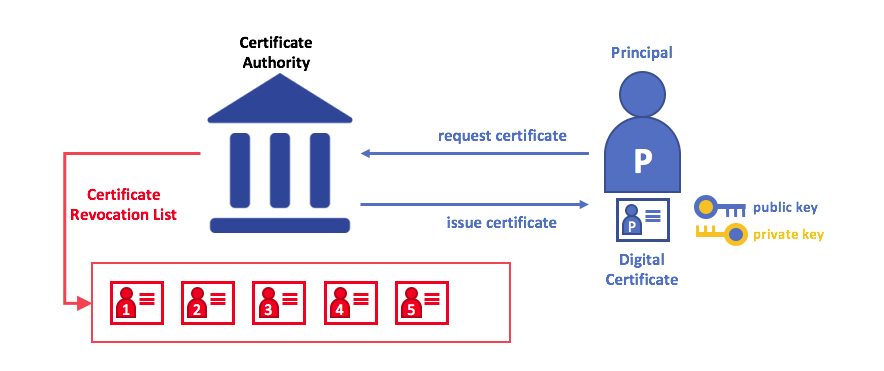
As you’ve seen, an actor or a node is able to participate in the blockchain network using a digital identity issued by an authority trusted by the system. In the most common case, digital identities (or simply identities) have the form of cryptographically validated digital certificates that comply with the X.509 standard and are issued by a Certificate Authority (CA).
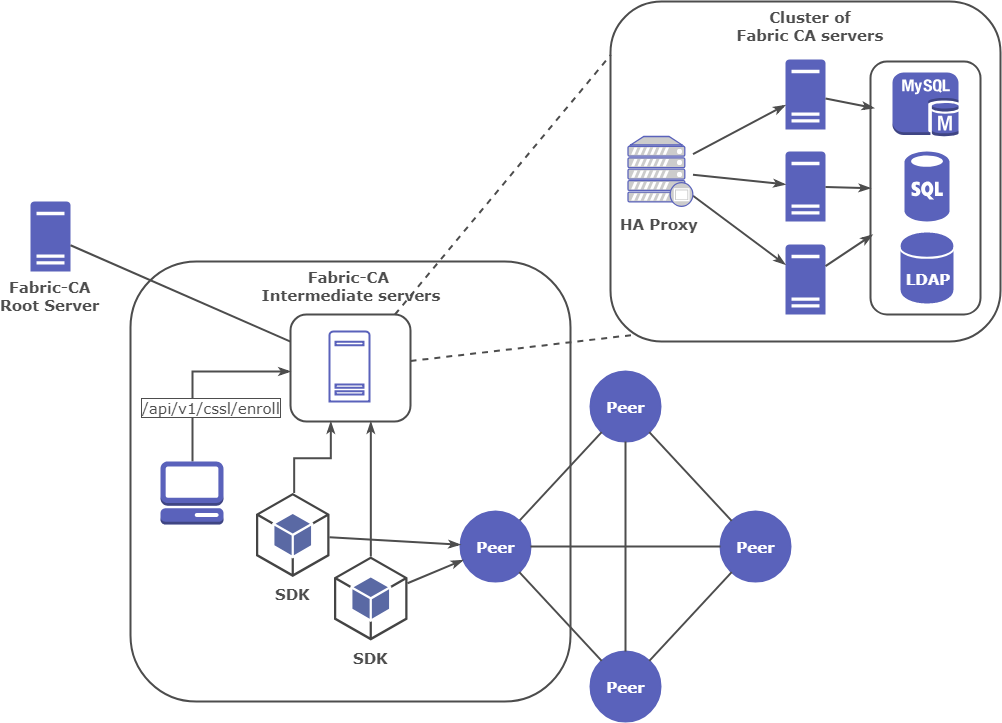
A Certificate Authority distributes certificates to different actors. These certificates are digitally signed by the CA and bind together the actor with the actor’s public key (and optionally with a comprehensive list of properties). As a result, if one trusts the CA (and knows its public key), it can trust that the specific actor is bound to the public key included in the certificate, and owns the included attributes, by validating the CA’s signature on the actor’s certificate.
### Vulos Digital Signature
The diagram below shows the process of signing a document while maintaining the integrity of that document.
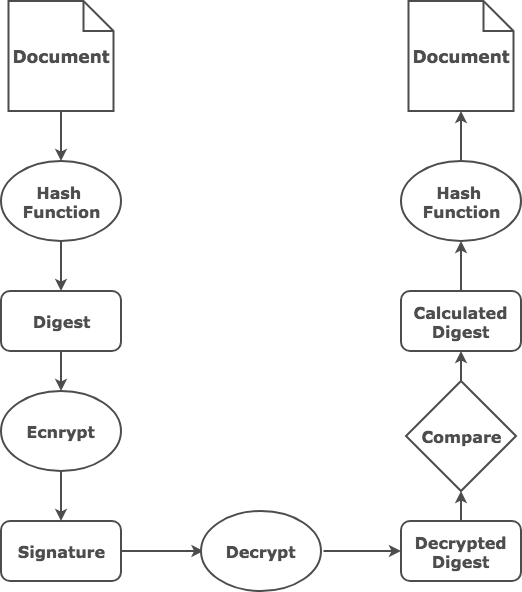
Digital signatures, produced in this way, provide us with evidence of a document’s integrity, since changing the document, intentionally or not, would result in the receiver calculating a different message digest.
The digital signature also provides us with non-repudiation, since it is clear that the person who created the original digest had access to the identical document, and as long as that person maintained control of his private key, he’s the only one who could have produced the signature. When used for digital signature purposes, the private key is sometimes called the signing key, and the public key is called the verification key. Technically, these keys operate in the same way as standard public-key pairs, the terminology simply indicates clearly which key is used for what purpose.
# 🪙 Vulos Token
VULOS is the native token of the Vulos Ecosystem.
Vulos Tokenomics (token + economics) is a presentation of the VULOS token from an economic and utility perspective. Tokenomics help both users and investors develop an idea of **how they can benefit from the usage of the VULOS token, its use cases, and the principal idea behind VULOS.**
#### The initial use cases of VULOS are:
* Pay for Digital Signature, Identity Verifications, and Authentications
* The in-game currency of the Cryptonoids Game
* Vulos Staking
* Vulos Reward
### Vulos Ecosystem Payment Method
Vulos users will be able to use VULOS for **any transaction** inside the whole Ecosystem varying from Digital Signatures to Identity Verifications and Authentications. Individuals will be able to **connect their wallets with the Vulos Applications and pay directly** without having to go through intermediaries or long and insecure waiting processes. Vulos Applications are not only intended for personal use but also for **businesses, enterprises, and government institutions,** which will be offered several payment methods using VULOS tokens.
### VULOS within Cryptonoids
Cryptonoids is a blockchain-based play-to-earn game. Cryptonoids' main monetary components are **NFTs (non-fungible-tokens) and the VULOS token itself.** NFTs will be used to unlock new characters, boost their robust abilities, and give them outstanding visuals while the VULOS token will be used as the in-game payment method. Cryptonoids players will be rewarded any missions completed, challenges terminated, future tournaments, leaderboard podiums, and notably for the time they spend playing Cryptonoids - **all with VULOS tokens.**
### Vulos Staking
**Be rewarded for holding you crypto.** Vulos users can stake their tokens and earn tasty APY when locking their VULOS for a decided portion of time. More information concerning Vulos Staking will be released in the future.
### Vulos Rewards
To increase the token utility and experience, Vulos will give **rewards and cashback to anyone using the Vulos Ecosystem.** Cryptonoids’ players will be rewarded for the time they spend in-game in VULOS tokens. Cashback tokens will be rewarded when using both Vulos Identity & Vulos Signature. **End users will have full control of their rewarded VULOS tokens and can use them anywhere.**

{% hint style="info" %}
Please note that this section will be reworked with more precise information when the token goes public.
{% endhint %}
# 📜 Legal Disclaimer
This White Paper is for informational purposes only. The information included herein may not be exhaustive and does not imply any element of a contractual relationship. The content of this White Paper is not binding on Vulos or their legal affiliates (“Vulos” “we” or “us”), and Vulos reserves the right to change, modify, add, or remove portions of this White Paper for any reason at any time before, during, and after the sale of Vulos tokens by posting the amended overview on its website.
• This overview does not constitute investment, legal, tax, regulatory, financing, accounting or other advice, and it is not intended to provide the sole basis for any evaluation of a transaction involving the acquisition of Vulos tokens. Neither Vulos nor any of its officers and employees are to be or shall be considered as advisors in any legal, regulatory, tax, or financial matters. Prior to acquiring Vulos tokens, a prospective purchaser should consult with his/her/its own investment, legal, tax and/or accounting advisors and/or other consultants to determine the potential benefits, burdens, and other consequences of such a transaction. Individuals, businesses, and other organizations should carefully weigh the risks, costs, and benefits of acquiring the Vulos token before participating in the token sale. If you are not in the position to accept or understand the risks associated with the sale of the Vulos token (including the risks related to any non-development or expansion of the Vulos platform or any other risks as indicated in this White Paper), you should not acquire the Vulos token.
• Nothing in this White Paper shall be deemed to constitute a prospectus of any sort or a solicitation for investment, nor does it in any way pertain to an offering or a solicitation of an offer to buy any securities in any jurisdiction. The Vulos token is NOT intended to constitute a security or currency in any jurisdiction. The Vulos token DOES NOT entitle the holder to an ownership interest (equity or otherwise) in Vulos or any Vulos-sponsored or affiliate event or festival. Acquiring Vulos tokens will not give you any right to control or influence Vulos’s organization, governance, or business.
• Purchase of the Vulos token is final and non-refundable.
• You are not eligible and you shall not purchase the Vulos token through the token sale if you are a citizen or resident (tax or otherwise) of any country, state, or territory where the purchase of the Vulos token or similar crypto tokens may be prohibited. By purchasing the Vulos token, you represent and warrant that you are legally permitted to purchase the Vulos token and assume the responsibility for complying with all applicable laws and regulations.
• To the maximum extent permitted by the applicable laws, regulations, and rules, the Vulos token, Vulos, and its officers and employees thereof shall not be liable for any indirect, special, incidental, consequential or other losses of any kind, in tort, contract, or otherwise (including but not limited to loss of revenue, income, or profits, and loss of use or data), directly or indirectly arising out of or in connection with: (i) any acceptance of or reliable on this White Paper or any part thereof by you, (ii) any error, omission, or inaccuracy in any such information, or (iii) any action resulting therefrom, or (iv) your use or inability to access the Vulos platform.
• Vulos and its officers and employees thereof shall not be liable for your loss of any Vulos token after it is transferred to you by any reason, including, but not limited to, your failure to maintain or backup an accurate record of your password or password cracking by somebody due to your poor maintenance of your password.
• Vulos assumes no liability or responsibility for any loss or damage that would result from or relate to the incapacity to use the Vulos token.
• No regulatory authority has examined or approved of any of the information set out in this White Paper. No such action has been or will be taken under the laws, regulatory requirements, or rules of any jurisdiction. The publication, distribution, or dissemination of this White Paper does not imply compliance with applicable laws, regulatory requirements, or rules. Regulatory authorities are carefully scrutinizing businesses and operations associated with crypto tokens throughout the world. In that respect, regulatory measures, investigations, or actions may impact Vulos’s business and platform and may limit or prevent Vulos from further developing the Vulos platform in the future. Any person undertaking to acquire the Vulos token must be aware that Vulos business model may change or need to be modified because of new regulatory and compliance requirements from any applicable laws in any applicable jurisdictions or otherwise. In such a case, purchasers and any person undertaking to acquire the Vulos token acknowledge and understand that neither Vulos nor any of its affiliates shall be held liable for any direct or indirect loss or damages caused by such changes. • The distribution and/or dissemination of this White Paper may be restricted by the laws, regulatory requirements, and rules of certain states, countries, or jurisdictions. Persons into whose possession this White Paper may come are urged to inform themselves about, and to observe, any such restrictions that are applicable to their possession of this White Paper.
# ☎️ Contact
To contact Vulos reach us at **.**
To create a Ticket join our **Discord** [here](https://discord.com/invite/DXqdU4fVbf).
## Vulos Support
Here you will find all the necessary information for support & Vulos contacts.
{% content-ref url="/spaces/-MlPrXMulpwUI9SAYN2d" %}
[Vulos Support](https://support.vulos.io/)
{% endcontent-ref %}
## **Follow us:**
[**LinkedIn**](https://www.linkedin.com/company/vulos/) **|** [**Twitter**](https://twitter.com/vulos_official) **|** [**Telegram Channel**](https://t.me/TheVulos_Official) **|** [**Announcements Channel**](https://t.me/VulosANN) **|** [**Medium**](https://medium.com/@vulos_official) **|** [**Discord**](https://discord.gg/DXqdU4fVbf)

# ☎️ Contact
To contact Vulos reach us at **.**
To create a Ticket join our **Discord** [here](https://discord.com/invite/DXqdU4fVbf).
## Vulos Support
Here you will find all the necessary information for support & Vulos contacts.
{% content-ref url="/spaces/-MlPrXMulpwUI9SAYN2d" %}
[Vulos Support](https://support.vulos.io/)
{% endcontent-ref %}
## **Follow us:**
[**LinkedIn**](https://www.linkedin.com/company/vulos/) **|** [**Twitter**](https://twitter.com/vulos_official) **|** [**Telegram Channel**](https://t.me/TheVulos_Official) **|** [**Announcements Channel**](https://t.me/VulosANN) **|** [**Medium**](https://medium.com/@vulos_official) **|** [**Discord**](https://discord.gg/DXqdU4fVbf)

# 📜 Legal Disclaimer
This White Paper is for informational purposes only. The information included herein may not be exhaustive and does not imply any element of a contractual relationship. The content of this White Paper is not binding on Vulos or their legal affiliates (“Vulos” “we” or “us”), and Vulos reserves the right to change, modify, add, or remove portions of this White Paper for any reason at any time before, during, and after the sale of Vulos tokens by posting the amended overview on its website.
• This overview does not constitute investment, legal, tax, regulatory, financing, accounting or other advice, and it is not intended to provide the sole basis for any evaluation of a transaction involving the acquisition of Vulos tokens. Neither Vulos nor any of its officers and employees are to be or shall be considered as advisors in any legal, regulatory, tax, or financial matters. Prior to acquiring Vulos tokens, a prospective purchaser should consult with his/her/its own investment, legal, tax and/or accounting advisors and/or other consultants to determine the potential benefits, burdens, and other consequences of such a transaction. Individuals, businesses, and other organizations should carefully weigh the risks, costs, and benefits of acquiring the Vulos token before participating in the token sale. If you are not in the position to accept or understand the risks associated with the sale of the Vulos token (including the risks related to any non-development or expansion of the Vulos platform or any other risks as indicated in this White Paper), you should not acquire the Vulos token.
• Nothing in this White Paper shall be deemed to constitute a prospectus of any sort or a solicitation for investment, nor does it in any way pertain to an offering or a solicitation of an offer to buy any securities in any jurisdiction. The Vulos token is NOT intended to constitute a security or currency in any jurisdiction. The Vulos token DOES NOT entitle the holder to an ownership interest (equity or otherwise) in Vulos or any Vulos-sponsored or affiliate event or festival. Acquiring Vulos tokens will not give you any right to control or influence Vulos’s organization, governance, or business.
• Purchase of the Vulos token is final and non-refundable.
• You are not eligible and you shall not purchase the Vulos token through the token sale if you are a citizen or resident (tax or otherwise) of any country, state, or territory where the purchase of the Vulos token or similar crypto tokens may be prohibited. By purchasing the Vulos token, you represent and warrant that you are legally permitted to purchase the Vulos token and assume the responsibility for complying with all applicable laws and regulations.
• To the maximum extent permitted by the applicable laws, regulations, and rules, the Vulos token, Vulos, and its officers and employees thereof shall not be liable for any indirect, special, incidental, consequential or other losses of any kind, in tort, contract, or otherwise (including but not limited to loss of revenue, income, or profits, and loss of use or data), directly or indirectly arising out of or in connection with: (i) any acceptance of or reliable on this White Paper or any part thereof by you, (ii) any error, omission, or inaccuracy in any such information, or (iii) any action resulting therefrom, or (iv) your use or inability to access the Vulos platform.
• Vulos and its officers and employees thereof shall not be liable for your loss of any Vulos token after it is transferred to you by any reason, including, but not limited to, your failure to maintain or backup an accurate record of your password or password cracking by somebody due to your poor maintenance of your password.
• Vulos assumes no liability or responsibility for any loss or damage that would result from or relate to the incapacity to use the Vulos token.
• No regulatory authority has examined or approved of any of the information set out in this White Paper. No such action has been or will be taken under the laws, regulatory requirements, or rules of any jurisdiction. The publication, distribution, or dissemination of this White Paper does not imply compliance with applicable laws, regulatory requirements, or rules. Regulatory authorities are carefully scrutinizing businesses and operations associated with crypto tokens throughout the world. In that respect, regulatory measures, investigations, or actions may impact Vulos’s business and platform and may limit or prevent Vulos from further developing the Vulos platform in the future. Any person undertaking to acquire the Vulos token must be aware that Vulos business model may change or need to be modified because of new regulatory and compliance requirements from any applicable laws in any applicable jurisdictions or otherwise. In such a case, purchasers and any person undertaking to acquire the Vulos token acknowledge and understand that neither Vulos nor any of its affiliates shall be held liable for any direct or indirect loss or damages caused by such changes. • The distribution and/or dissemination of this White Paper may be restricted by the laws, regulatory requirements, and rules of certain states, countries, or jurisdictions. Persons into whose possession this White Paper may come are urged to inform themselves about, and to observe, any such restrictions that are applicable to their possession of this White Paper.